Paleokastritsa Underwater Cruise: What You Actually See Below Deck
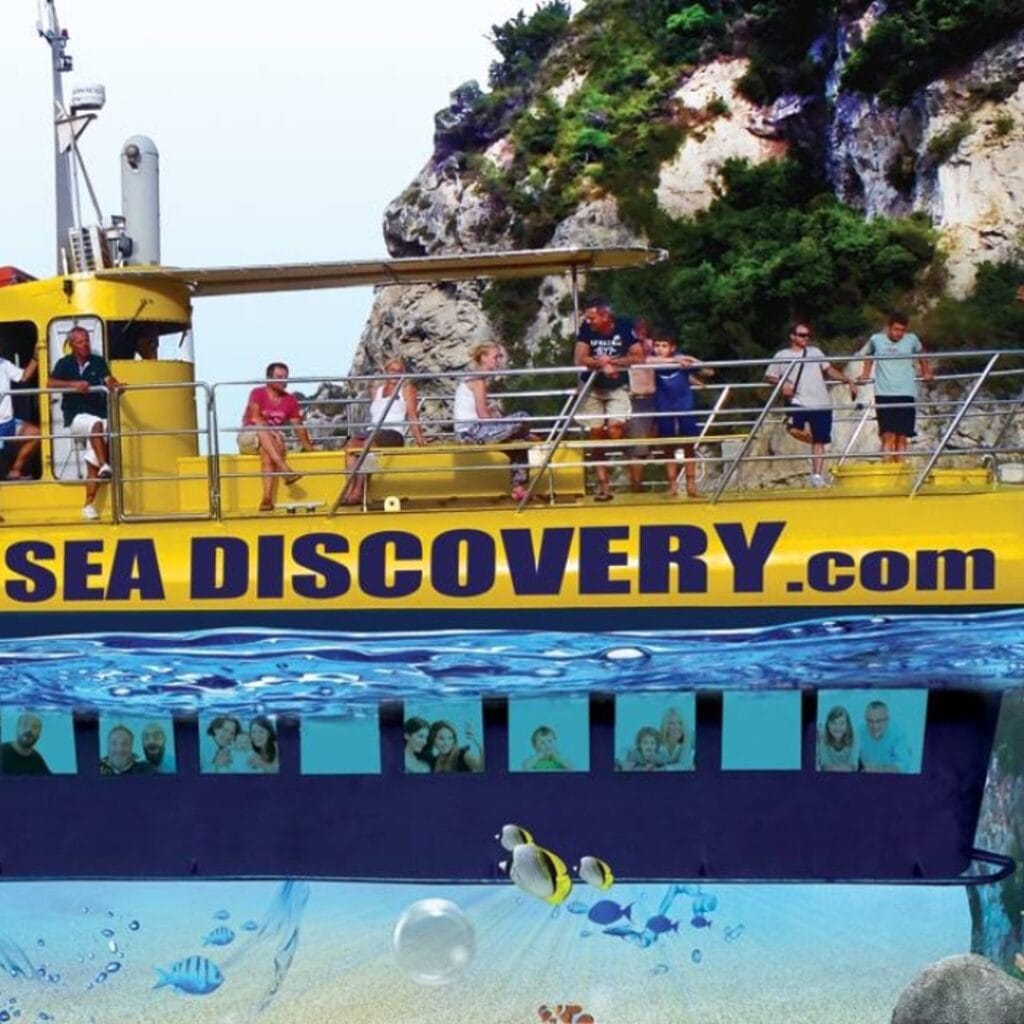
This is not a glass-bottom boat viewed from an open deck. Passengers on the Paleokastritsa underwater cruise move into a submerged cabin, sit below the waterline and look through large…
This is not a glass-bottom boat viewed from an open deck. Passengers on the Paleokastritsa underwater cruise move into a submerged cabin, sit below the waterline and look through large side windows. That distinction determines who will enjoy it: the experience is closer to a short moving observation room than to swimming, snorkelling or a conventional coastal cruise.
The vessel is the attraction
The listing describes a one-hour booking with about 45 minutes of cruising. Its cabin sits roughly 2.2 metres beneath the surface and has 22 viewing windows. Passengers remain dry, and no swimming ability or equipment is required. The boat therefore offers a way for children, non-swimmers and mixed-age groups to look below the surface without entering the water.

Visibility cannot be scheduled
The windows provide access to the marine environment, not a guaranteed list of species. Water clarity, glare, condensation, the boat’s movement and where fish happen to be will influence the view. Treat photographs of especially clear conditions as examples rather than a promise. A passenger expecting an aquarium-style display may be disappointed; someone interested in seeing the real seabed and passing fish without getting wet is a better match.
Children who can remain seated and interested for the cruise length are the clearest audience. Very young passengers may find the changing light and enclosed cabin unfamiliar, while adults prone to motion sickness should remember that being below deck does not stop the vessel from moving. Looking towards a stable point outside the window may help, but anyone with a history of severe symptoms should seek appropriate advice before booking.
The source listing calls the cabin air-conditioned, but it also records guest comments about heat and misted glass in midsummer. That is a useful operational detail. Wear light clothing, carry water for before and after the trip, and ask staff which seats or windows currently have the clearest view rather than choosing only by proximity to the stairs.
Boarding matters more than swimming ability
Remaining dry does not automatically make a vessel accessible. Passengers still need to board and reach the lower cabin. Anyone with limited mobility, difficulty using steps or discomfort in enclosed spaces should ask for the actual boarding arrangement before reserving. The product language should not be stretched into an accessibility promise that the assigned vessel cannot meet.

How to place it in a Paleokastritsa day
The short duration makes this an add-on rather than the organising event for a whole day. Leave a margin around boarding, then plan the beach, monastery viewpoint or a separate surface boat trip independently. Do not assume the underwater cruise replaces a cave excursion: the viewing purpose and vessel design are different.
For alternatives on the water, compare Corfu cruise formats. If the rest of the day is beach-led, use the Corfu beaches guide before deciding how long to remain in the area.
Current departures and terms
Affiliate disclosure: CorfuDiscovery may receive a commission from a completed GetYourGuide reservation without adding a charge to the traveller.