On 6 January Corfu celebrates Epiphany, which Greeks call Theofania or Ta Fota, "the Lights". The main ceremony takes place at noon in the Old Port of Corfu Town. The Metropolitan of Corfu blesses the sea and throws a cross into the water, and young swimmers dive in to bring it back. Whoever reaches it first is said to have the blessing for the year. In 2027, 6 January falls on a Wednesday, which is a public holiday in Greece.
What the feast is about
Epiphany marks the baptism of Christ by John the Baptist in the River Jordan. In the Orthodox Church it is one of the twelve great feasts. It ends the twelve days of Christmas, and its central rite is the Great Blessing of the Waters. By throwing the cross into the sea, the Church blesses not only the water in church but the sea, the rivers and, symbolically, all of creation.
For an island, that means boats, fishermen and sailors. Throughout Greece, whatever the weather, people gather at harbours, rivers and lakes for the moment the cross hits the water.
How the day runs in Corfu Town
The Holy Metropolis announces the exact programme in the first days of January. In recent years the order has been the same.
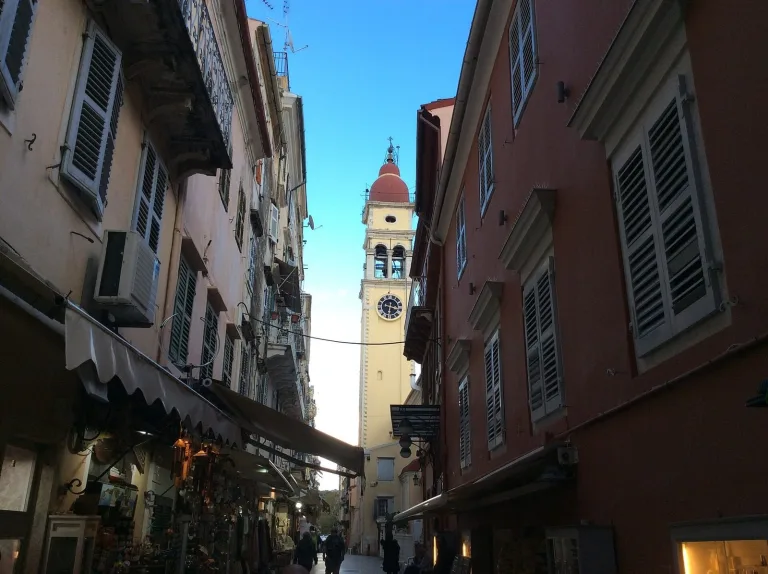
- Morning: every parish holds the Divine Liturgy and a first blessing of the waters inside the church. Families take some of the holy water home in bottles. The Metropolitan, currently Metropolitan Nektarios, celebrates at the Metropolitan Church of the Panagia Spilaiotissa, at the top of the Old Town above the Old Port.
- Late morning: clergy, local authorities and a crowd of residents walk down from the cathedral to the Old Port in a short procession.
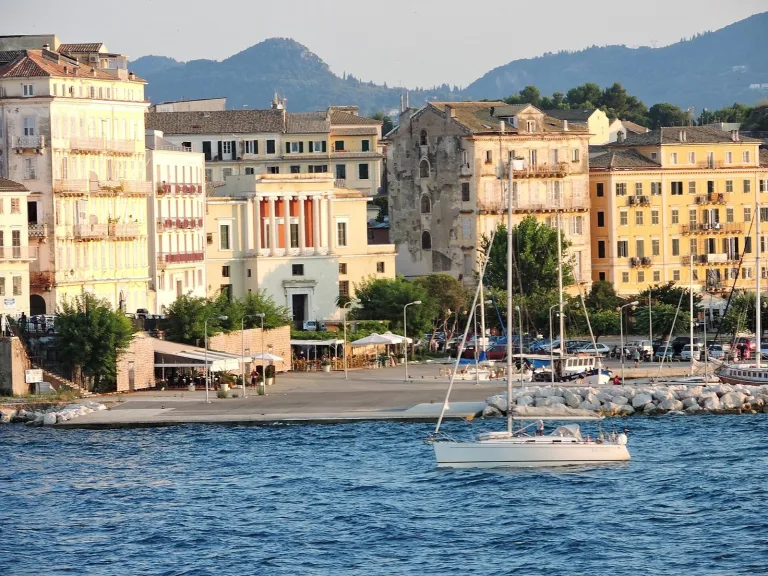
- Noon: the blessing and the throwing of the cross take place in the Old Port. The Metropolitan stands on a Coast Guard boat or at the quay. When the cross is thrown, the swimmers dive. Sometimes it takes several attempts before one of them gets hold of it.
- The winner lifts the cross out of the water to the applause of the crowd. He receives a small gold cross from the Metropolitan, and the other swimmers often get silver ones. In January 2026 the cross was caught by Christos Zouzos, for the third time.
The ceremony goes ahead in rain and wind. In 2026 it took place in bad weather and the quay was still full. The sea in early January is usually around 15 °C, and air temperature can drop to single figures in the morning.
Where else on the island
Many villages and harbours hold their own ceremony at about the same time. This is useful if you are staying outside town:
- Potamos: from the bridge over the river, straight after the Liturgy, around 11:30.
- Lefkimmi: at the port, at noon.
- Ipsos and Gouvia Marina, organised by the local cultural associations.
- Paleokastritsa: at the small harbour of Alipa.
- Kouloura, on the north-east coast, and other small harbours.
Times are announced locally in the days before. Ask at your hotel or in the village café.
The eve: the Epiphany carols
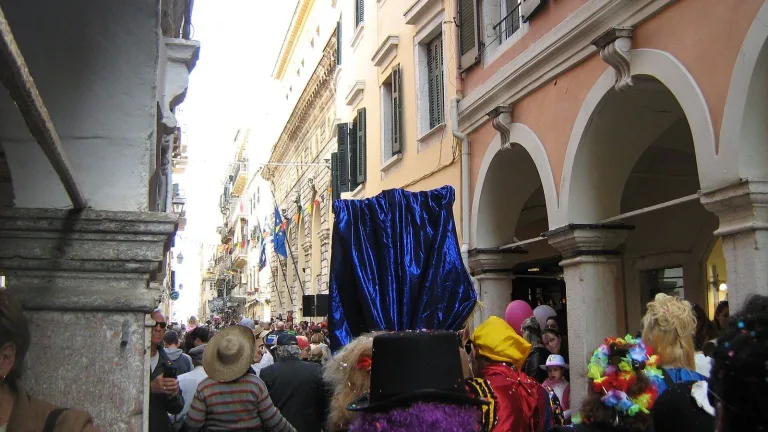
On 5 January children go from house to house and shop to shop singing the Kalanda ton Foton, the Epiphany carols, with triangles. People give them coins or sweets. Some villages, such as Argyrades in the south, hold events on the eve. In folk tradition the day also closes the season of the kallikantzaroi, the goblins of the twelve days of Christmas, who are chased away by the blessing of the waters.
Where to watch in the Old Port
- The quay of the Old Port is closest to the action, but it fills up first. Arrive by 11:15 to 11:30 if you want to be at the front.
- The Mourayia, the old sea walls above the port, give a good view from above. Many Corfiots watch from here.
- The swimmers enter the water from the quay. If you want photos of the dive, stand towards the middle of the quay, not at the ends.
Practical tips
- Traffic: the police close the roads around the Old Port for the ceremony. Do not try to drive down to the port. Park further away and walk.
- Entry: free and open to everyone, believers or not.
- What is open: 6 January is a national holiday. Banks and public services are closed. Most cafés and many restaurants in town are open, and they are busy at lunch after the ceremony.
- Clothing: a warm, waterproof jacket. January is one of the wettest months in Corfu.
- Swimming: the dive is for experienced local swimmers who know the port. It is not a public swim, so watch from the quay.
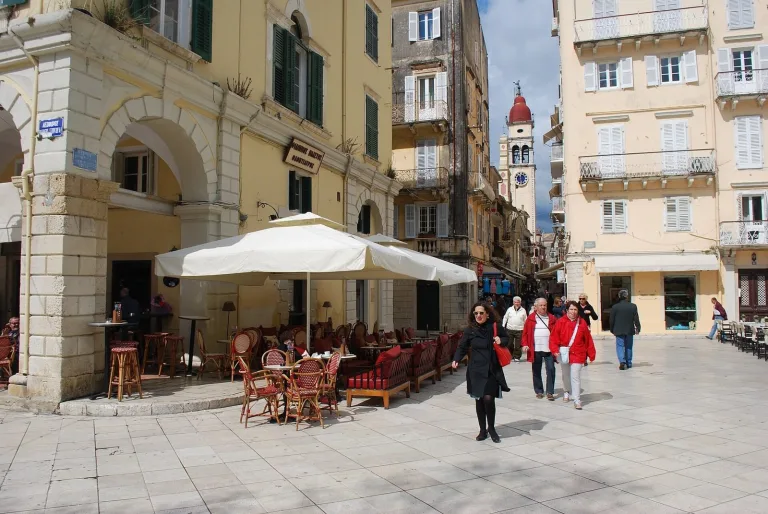
- Combine it with: a walk through the Old Town, still decorated for Christmas. See our Corfu Old Town guide and the other dates in our events calendar.
Frequently asked questions
What time is the blessing of the waters in Corfu?
The cross is thrown into the Old Port at about 12:00 noon on 6 January, after the morning Liturgy at the Spilaiotissa cathedral. Check the Metropolis announcement a few days before for the exact time.
Is 6 January a holiday in Greece?
Yes. Epiphany is a national public holiday. Schools, banks and public offices are closed.
Can tourists watch the ceremony?
Yes. It is a public ceremony in the open air and visitors are welcome. Stay behind the swimmers and the clergy, and leave the steps of the quay free.
Why do people take water home?
The water blessed at Epiphany, the "great holy water", is kept at home all year. People drink a little of it and use it to bless the house.
Photo: Corfu, the old port - Παλιό λιμάνι, Κέρκυρα (29072187671) by Dimitris Kamaras from Athens, Greece, CC BY 2.0, via Wikimedia Commons.